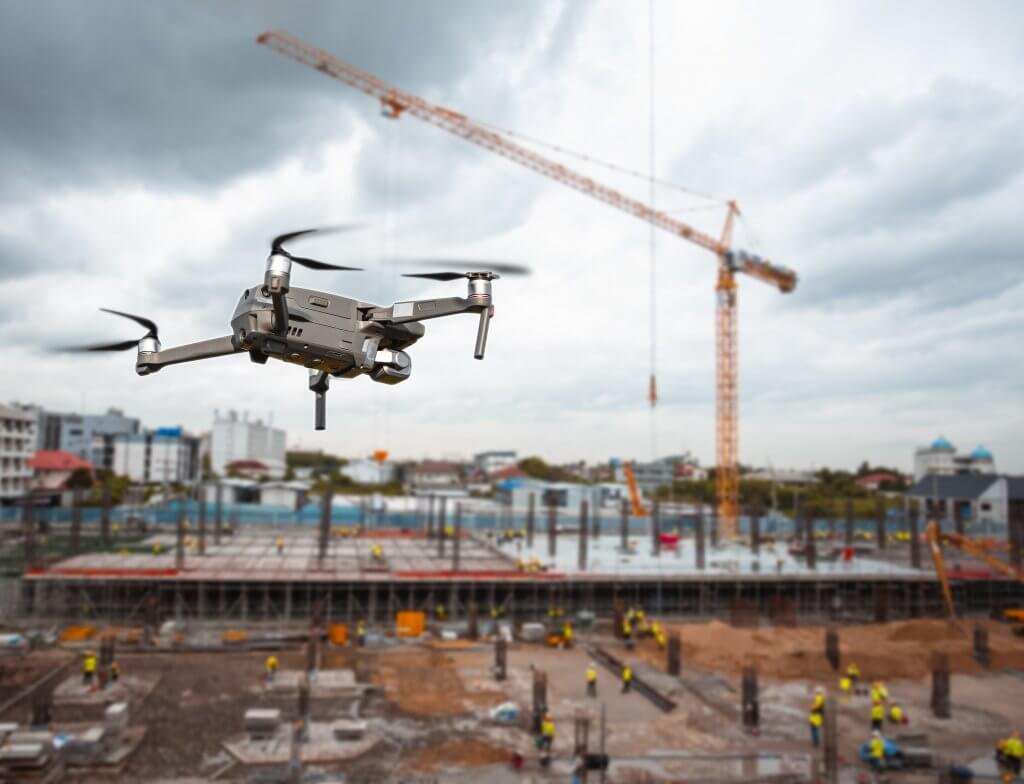
Effective asset management underpins every successful industrial operation. It keeps critical infrastructure — from construction sites to energy grids — running safely, efficiently and with minimal downtime. However, traditional inspection methods rely on manual work, scaffolding and rope access, which slows teams down and increases risk. These methods are expensive, time-consuming and put workers in harm’s way. As a result, asset managers need a smarter, data-driven way to see what is happening on site.
Drone inspections provide that shift. By flying Unmanned Aerial Systems (UAS) with advanced sensors, organizations capture high-resolution aerial data that was difficult or even impossible to obtain before. This technology turns inspections from a reactive task into a proactive and predictive process, so teams can spot issues earlier and act with confidence.
For professionals in construction, infrastructure, energy and beyond, drone inspections translate into tangible results: improved safety, fewer site visits, lower costs and a clear competitive advantage.
What Are Drone Inspections For Asset Management?
Drone inspections utilize UAS equipped with specialized sensors—such as high-resolution RGB cameras, thermal imagers, and LiDAR scanners—to collect detailed aerial data from physical assets. This process involves more than just flying a drone; it’s a sophisticated method of data acquisition and analysis. We process raw data into actionable intelligence, such as high-resolution orthomosaic maps, detailed 3D models, and comprehensive thermal reports.
This engineering-grade data provides asset managers with an unprecedented view of their infrastructure’s condition, allowing for precise, data-driven decision-making. Instead of relying on subjective manual assessments, teams can access objective, repeatable, and highly accurate information to guide maintenance and operational strategies.
The Transformative Benefits of Drone Inspections for Asset Management
Integrating drones into asset management workflows delivers measurable improvements across safety, cost, speed, and accuracy.
Enhanced Safety
Traditional inspections often require personnel to work at height, in confined spaces, or near hazardous materials. Drone inspections virtually eliminate these risks by keeping workers safely on the ground. For instance, instead of climbing a cell tower, a drone can capture detailed imagery of the structure, reducing the hazards inspectors face by up to 75%. This shift not only protects personnel but also minimizes operational disruptions and potential liabilities.
Superior Cost-Effectiveness
The financial benefits of drone inspections are substantial. By reducing the need for expensive equipment like scaffolding, helicopters, or mobile lifts, organizations can cut inspection costs by 30-50%. A prime example is Cargill, which saves approximately $3,500 per grain bin inspection by using the Elios 3 drone, cutting a four-hour manual process down to just 30 minutes. As a result, these savings, compounded across numerous assets, lead to a significant return on investment.
Unmatched Speed and Efficiency
Drones can cover vast and complex areas in a fraction of the time required for manual inspections. A runway that might take hours to inspect on foot can be surveyed by a drone in under 30 minutes. This speed allows for more frequent inspections, enabling teams to move from reactive repairs to proactive, condition-based maintenance. With rapid data turnaround, often within 24-48 hours, asset managers can make timely decisions that prevent minor issues from escalating into major failures.
Pinpoint Accuracy
Equipped with advanced sensors and positioning technology like RTK/PPK, drones capture survey-grade aerial data with remarkable precision. High-resolution imagery can detect hairline cracks just millimeters wide on pavement, while advanced analytics can identify defects on cell towers with over 95% accuracy. This level of detail ensures that no issue goes unnoticed, providing a comprehensive and permanent digital record of an asset’s condition.
Use Cases Across Key Industries
The versatility of drone inspections allows for a wide range of applications, delivering value across diverse sectors.
- Construction: Drones monitor project progress with high-resolution maps, verify work against design plans, and calculate stockpile volumes with precision. As a result, general contractors and developers manage site logistics and resolve disputes effectively.
- Infrastructure: For assets like bridges, tunnels, and power lines, drones conduct inspections safely and efficiently. At Paris Charles de Gaulle Airport, drones inspect runway surfaces, while in Norway, the Scout 137 drone navigates confined tunnel spaces to create detailed 3D maps for maintenance planning.
- Energy: In the solar industry, thermal drones detect faulty cells and wiring issues to optimize energy production. Similarly, in wind turbines and power grids, they identify overheating components and structural defects, preventing costly outages. A major service outage cost AT&T an estimated $140 million in compensations—a scenario that proactive drone inspections can help prevent.
- Mining: Drones revolutionize mine safety and operations by mapping sites, calculating stockpile volumes, and monitoring for hazards like gas leaks or rockfalls in real-time. This minimizes human exposure in dangerous underground environments.
- Agriculture: Drones with thermal and multispectral sensors help optimize crop management by identifying areas of water stress or disease, enabling targeted interventions that improve yields and reduce waste.
How Drone Inspections Work: A Three-Step Process
A successful drone inspection program is built on a streamlined, end-to-end workflow.
1. Data Acquisition
The process begins with mission planning and a thorough safety assessment. Certified pilots then deploy drones equipped with the appropriate sensors (RGB, thermal, or LiDAR) to capture the necessary aerial data. This phase is executed to minimize disruption to ongoing site activities.
2. Data Processing and Analysis
Once collected, the raw data is processed using specialized software to create engineering-grade deliverables. This can include georeferenced orthomosaic maps, interactive 3D models, or annotated thermal reports. AI-powered algorithms can analyze this data to automatically detect anomalies, such as cracks, corrosion, or heat loss.
3. Reporting
The final step is to translate the processed data into clear, actionable insights. Detailed reports with visualizations and analytics are generated, empowering asset managers to understand the condition of their infrastructure at a glance and prioritize maintenance activities effectively.
Navigating Regulations and Certifications
Operating drones for commercial purposes is governed by strict regulations. In Canada, for example, Transport Canada’s Part IX UAV regulations outline the requirements for pilots and operations. Most industrial inspection missions are classified as “advanced operations,” requiring pilots to hold a specific certification. Partnering with a fully compliant and insured drone service provider is crucial to ensure all missions are conducted safely and legally.
The Future of Asset Management Is Here
In summary, drone inspections are no longer a niche technology; they are a fundamental component of modern asset management. By providing unparalleled safety, efficiency, and accuracy, drones empower organizations to make smarter, data-driven decisions that extend asset life, reduce operational costs, and mitigate risks. The ability to move from a reactive maintenance schedule to a proactive, condition-based strategy is a game-changer, delivering a powerful competitive advantage.
As technology continues to advance, the capabilities of drone inspections will only expand, further integrating AI, machine learning, and autonomous systems into the workflow. So if you want to modernize your asset management strategy, now is the time to adopt drone inspections.
Take the Next Step
Ready to transform your asset management strategy? Contact us for a consultation to discover how our expert drone inspection services can deliver rapid, reliable aerial intelligence for your critical infrastructure.